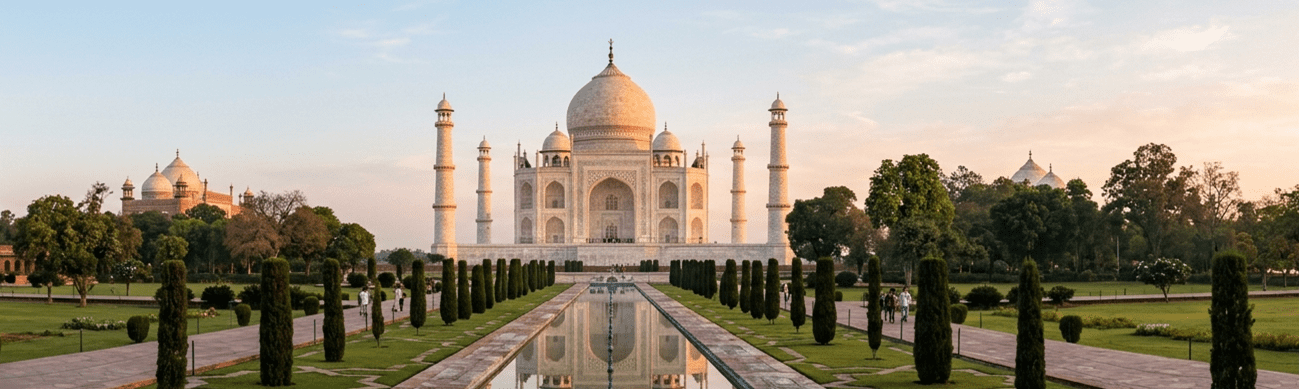
Taj Mahal is a stunning White Marble Mausoleum, located on the bank of Yamuna river in Agra district of Uttar Pradesh, India. It was built by the Fifth Mughal emperor “Shah Jahan” in the 17th century on the memory of his second wife Mumtaz Mahal.
Taj Mahal is the Symbol of Love and a one of the master-piece of Mughal Architecture, Taj Mahal is renowned for its perfect symmetry, intricate inlay work and statue as a UNESCO World Heritage site and one of the Seven Wonders of the world.
Symbol of Love
The Taj Mahal is Known as the “Symbol of Love” because it was built by the Fifth Mughal Emperor Shah Jahan on the memory of his beloved Wife Mumtaz Mahal, who was not only his wife but also his trusted advisor and always stand on his side when he take any decision.
In 1631, Mumtaz Mahal was died on giving birth to their fourteenth child, Her death deeply affected Shah Jahan and he went into mourning (Shok) for a long time. After Recovering from her death, he decide to built a grand mausoleum to express his immense grief, everlasting love and honor her memory forever.
The Great Architectural Design
The Architectural Design of Taj Mahal is one of the Master piece and finest achievements of Mughal architecture, blending Persian, Islamic and Indian styles at that time.
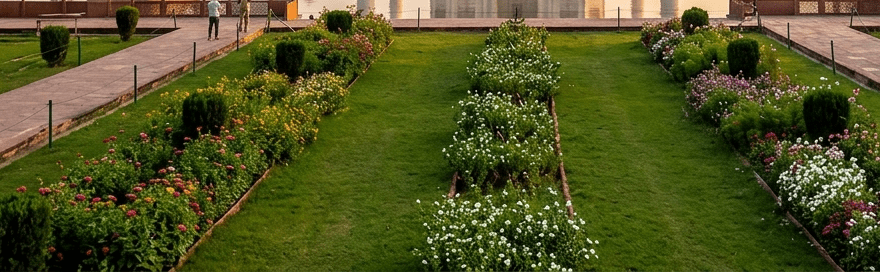
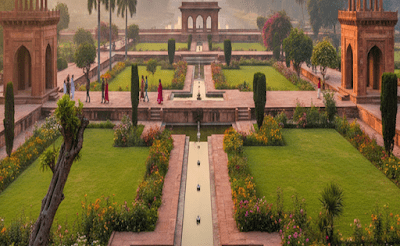
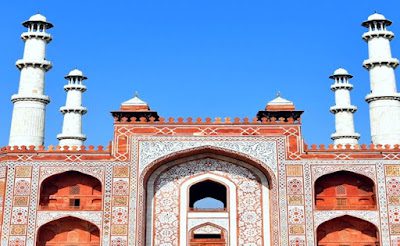
The Area of the Taj Mahal is spread over 42 acres (approximately), and is carefully planned along a central north-south axis. It includes Main Mausoleum, large char-bagh (four part) garden, mosque, guest house and a grand entrance gate (Darwaza-i-Rauza). The entire layout is based on symmetry and everything is aligned along a central water channel that reflect the image of mausoleum.
Main Mausoleum
The Mausoleum is built entirely from White Makrana Marble, known for its strength and luminous quality. The base structure is square with chamfered corners, giving it an octagonal appearance. With each side has a large central arch (Iwan) framed by smaller arches, which creating a sense of depth and balance.
The Charbagh Garden
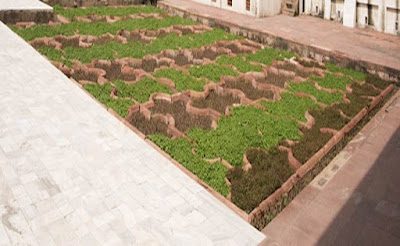
The Charbagh Garden follows the Persian style, because it is divided into four equal sections by water channels and walkways. These four parts symbolize the four rivers of paradise mentioned in Quran. The tomb of Mumtaz Mahal was placed at the centre of the garden.
Changing Color of Taj Mahal
The Taj Mahal was built with translucent Makrana white Marble, which changes color throughout the day and the wall of Taj Mahal is decorated with precious stone like turquoise, lapic lazuli, Jade, Crystals etc.
- In Morning Time, it appears in “Pinkish Color”.
- In Evening Time, it appears in “Milky Misit Color”.
- In Night Time, it appears in “Golden Color”.
UNESCO World Heritage Site
The Taj Mahal was designated as a UNESCO World Heritage site in 1983 for being “The Jewel of Muslim art in India and of the universally admired masterpieces of the world heritage”.